
When your dog says she’s done
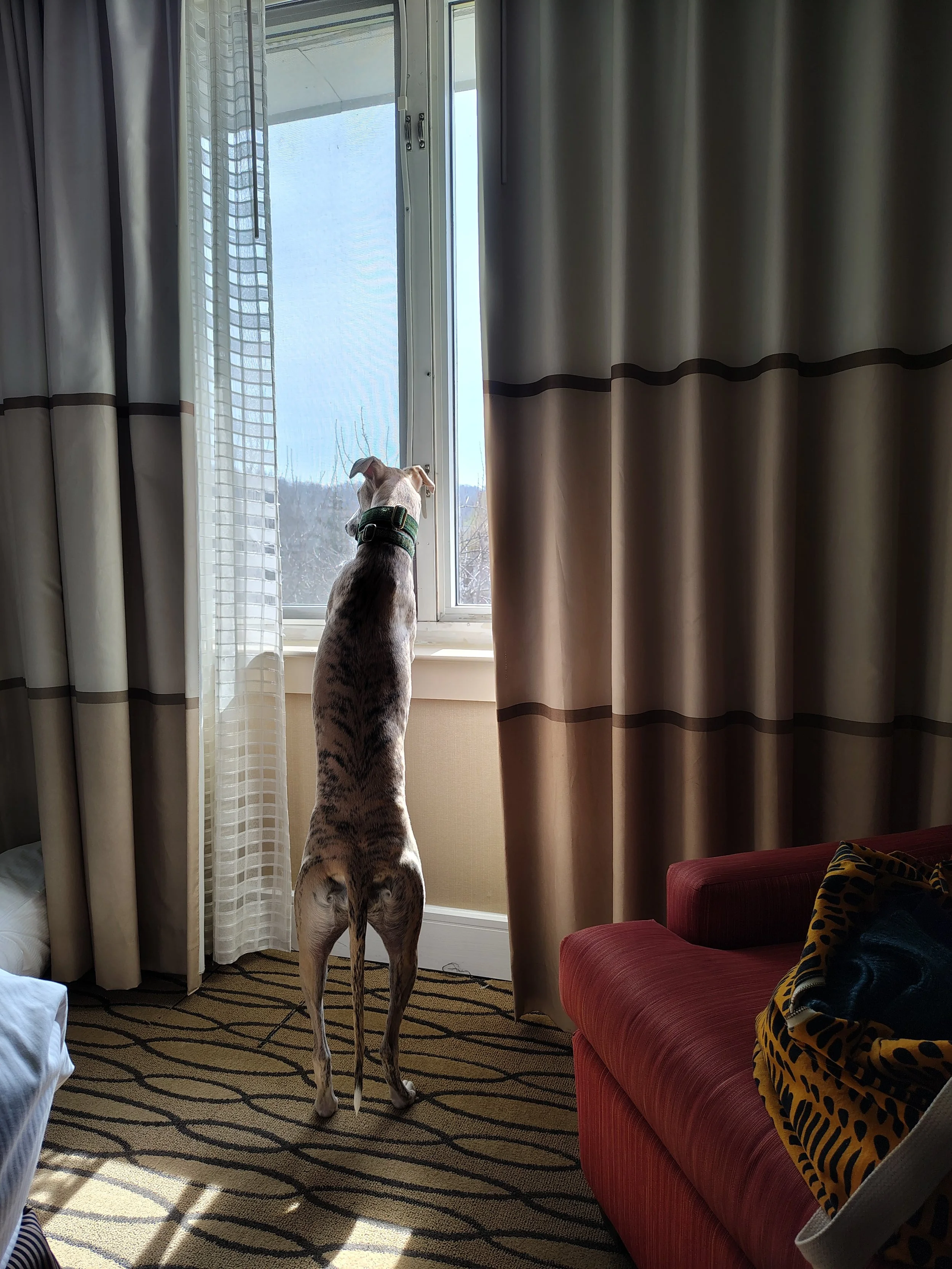
My adolescent dog Florence looking out the window of the hotel we stayed at this weekend.
I spent this weekend at a huge positive reinforcement training conference, packed with renowned training experts who were giving tons of fascinating presentations. I was so excited to go and learn from some of the best in my field.
But I barely got through a single full session.
And it’s not that I wasn’t interested.
Here’s what happened.
I brought my adolescent dog, Florence, with me. She had just turned two years old a few days before. I’d prepared her as best I could, but I was coming out of a serious chronic illness flare up just a week or so before the conference – so I wasn’t able to do all the training I had hoped to do prior.

Going into the conference, I was determined to make Florence’s well-being my priority. I would watch her body language carefully and I wouldn’t push her. If she said she was done, then I was going to respect that.
The first day, I wasn’t feeling my best. So we took things slowly and spent a lot of time up in the hotel room or wandering the grounds just acclimating.
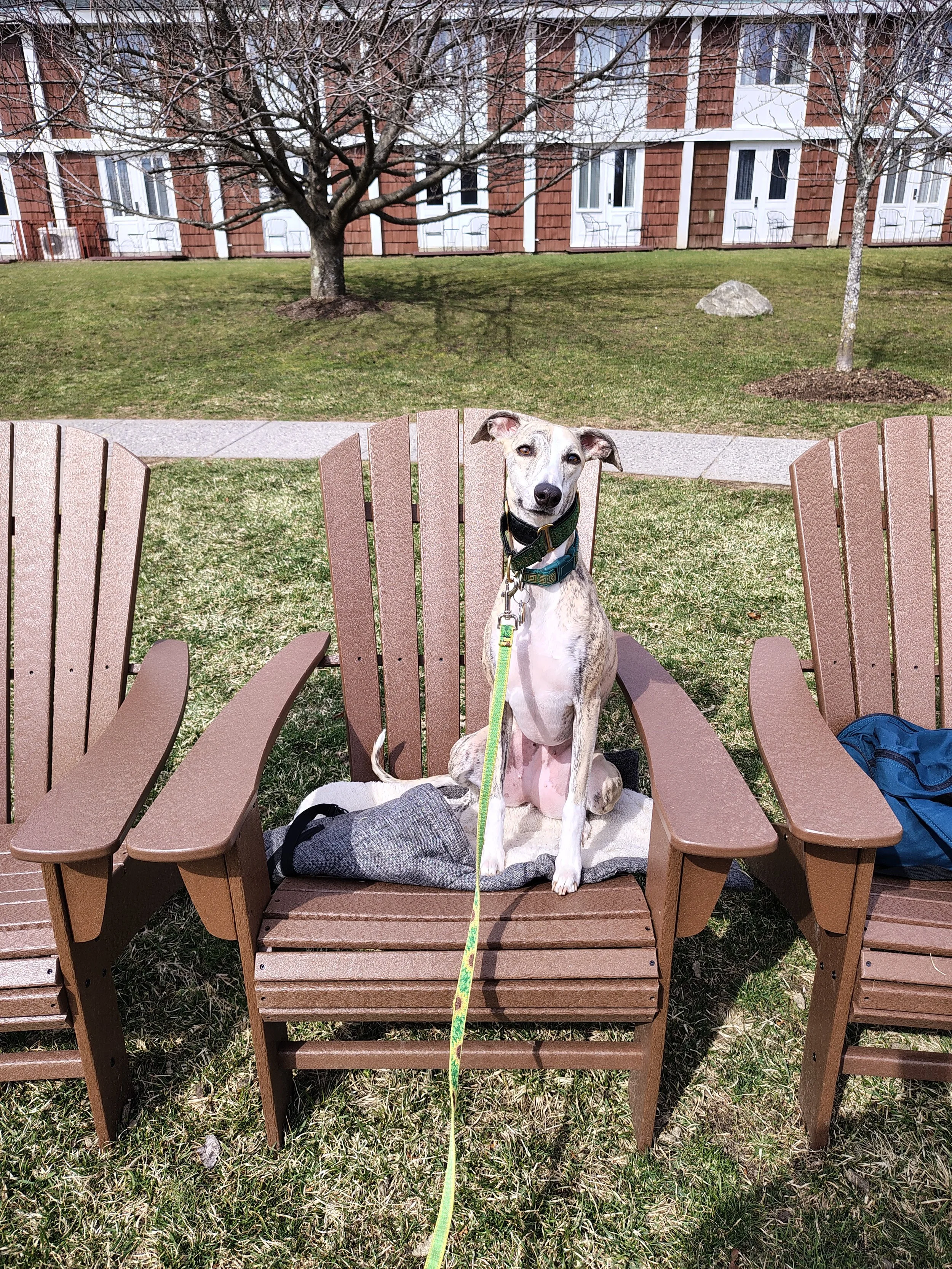
Florence made a ton of friends everywhere she went and adapted really wonderfully.
However, when we did get to the presentations, there were multiple times when Florence was in fact done, sometimes well before the session was.
So, when that happened, we quietly packed up our mat and left.
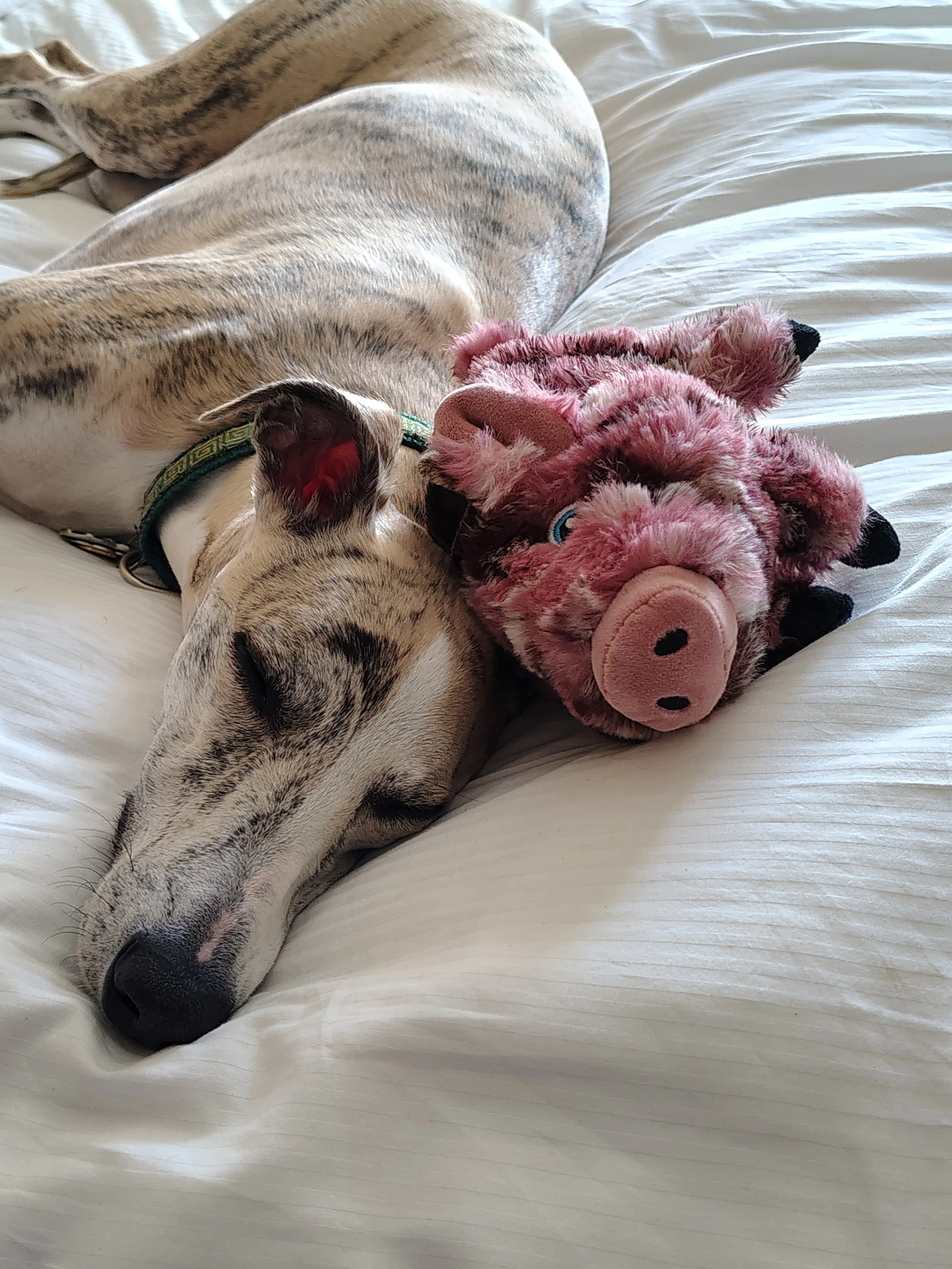
One memory stands out: on Saturday Florence was very restless and I made the call to slip out of a presentation early. I stopped by the Kong booth and bought her a toy. We took it outside so she could play with it on her long line, instead of sitting indoors trying unsuccessfully to settle on a mat. Despite my disappointment at missing the presentation, it was such a good feeling to watch Florence frolic around with her new stuffed piggy.
When you’re working with a living creature, you’re going to have moments like this. Moments where you need to make a choice – do I keep pushing through, or do I respect what my dog is telling me and give her a break?

Florence trying very hard to settle on her mat.
It can feel really hard to make that call. It doesn’t help when the stakes are high – you’ve paid for a conference, or for a class. But it can also be hard even when the stakes are much lower and you’re just at home doing a quick training session. There can be a strong impulse for people to keep going until they reach a certain goal, regardless of how the dog is feeling.
But good training isn’t about pushing through for the sake of finishing something. It’s about responding appropriately to the learner in front of you, even when it’s inconvenient or disappointing.
I’ll hold onto that memory of Florence playing with her piggy on the hotel lawn, of smiling watching her and knowing I had done the right thing for her well-being. I’ll keep it tucked in the back of my mind for the next time I need to make the right choice for her, or for any animal I train.